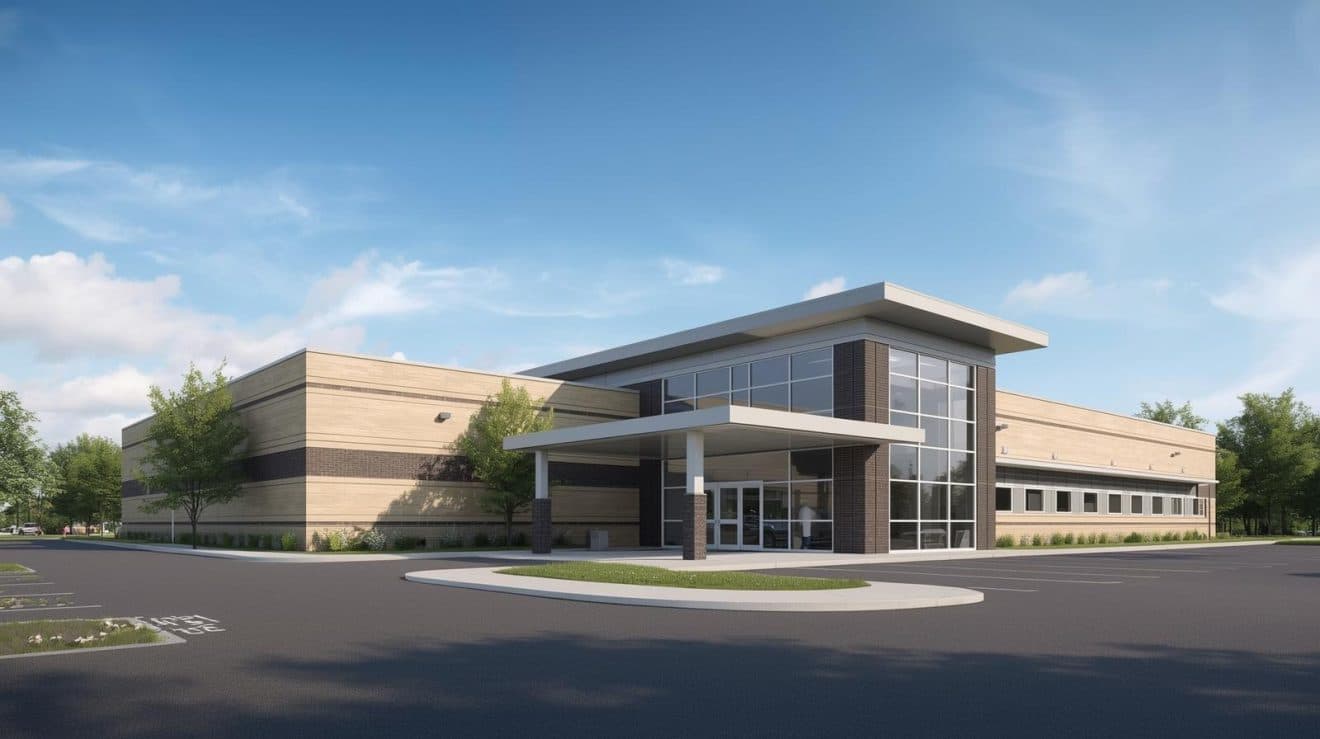

Medical office space follows different rules than standard office. Patients need easy parking and accessible entrances. Providers often want to be near the hospitals where they hold privileges. And the build-out, with plumbing in exam rooms, extra power, imaging, and after-hours HVAC, costs more and takes longer than a typical office suite.
This guide organizes Greater Atlanta's medical office market around the hospital campuses and suburban corridors where practices most often look. It is written for physician groups, dental and specialty practices, therapy and behavioral health providers, urgent care operators, and investors evaluating medical buildings. For more background, see medical office buildings in metro Atlanta.
On-campus vs. off-campus vs. retail medical
- On-campus medical office buildings sit on or next to a hospital campus. They are convenient for providers with hospital privileges, but some come with ground lease or use restrictions set by the health system.
- Off-campus medical office buildings sit along nearby corridors or in suburban office parks, often with more flexible terms and easier parking.
- Retail medical puts urgent care, dental, physical therapy, imaging, and wellness clinics in shopping centers, where visibility and convenience bring in patients.
Pill Hill and Central Perimeter
The cluster along Peachtree Dunwoody and Johnson Ferry roads in Sandy Springs, known as Pill Hill, is one of the region's largest concentrations of healthcare. It includes Northside Hospital Atlanta, Emory Saint Joseph's Hospital, and Children's Healthcare of Atlanta at Scottish Rite, with MARTA's Medical Center station nearby.
- Best for: specialists who need to be near these hospitals, surgical practices, women's health, pediatrics, and multi-location groups covering the north side.
- What you'll find: on-campus and adjacent medical office buildings, plus converted office space in the wider Perimeter Center area.
- Watch for: parking and traffic around the campus at peak hours, and use restrictions in health system-controlled buildings.
Midtown, Downtown, and Buckhead
Intown, medical office clusters around Emory University Hospital Midtown, Grady Memorial Hospital Downtown, and the Peachtree Road corridor in south Buckhead, home to Piedmont Atlanta Hospital and Shepherd Center.
- Best for: specialty practices tied to these hospitals, academic and research-affiliated groups, and practices serving intown patients.
- What you'll find: on-campus medical office towers, office buildings with medical tenants, and ground-floor clinic space in mixed-use buildings.
- Watch for: patient parking costs, garage clearance for transport vans, and Peachtree Road traffic.
Emory, Druid Hills, and Decatur
The Clifton Road corridor around Emory University Hospital, Children's Healthcare of Atlanta's Arthur M. Blank Hospital at North Druid Hills Road and I-85, and Emory Decatur Hospital make up another major healthcare cluster.
- Best for: academic and specialty practices, pediatric specialists, research-adjacent clinics, and providers serving DeKalb County.
- What you'll find: medical office along Clifton Road, North Druid Hills Road, and Clairmont Road, and smaller professional buildings in Decatur.
- Watch for: limited availability close to campus and traffic on the corridors around Emory.
North Fulton and Forsyth
Population growth in North Fulton and Forsyth has made this one of the busiest suburban medical markets. Wellstar North Fulton Hospital in Roswell, Emory Johns Creek Hospital, and Northside Hospital Forsyth in Cumming anchor the area.
- Best for: primary care, pediatrics, orthopedics, dental, physical therapy, and specialists following family-oriented growth.
- What you'll find: on-campus medical office buildings, suburban medical office along GA-400, GA-9, and Old Milton Parkway, and retail medical in grocery-anchored centers.
- Watch for: competition for well-located suites near the hospitals and GA-400 congestion for staff. See our Alpharetta and Cumming overviews.
Cobb and Cherokee
Wellstar Kennestone Hospital in Marietta is the center of Cobb's medical market, with Wellstar Cobb Hospital in Austell and Northside Hospital Cherokee in Canton serving the south and north ends.
- Best for: specialists affiliated with Kennestone, primary care and dental practices across Cobb and Cherokee, and outpatient therapy providers.
- What you'll find: medical office near the Kennestone campus and around the Marietta area, and suburban medical office and retail medical in Kennesaw, Acworth, and Canton.
- Watch for: older suburban buildings that may need plumbing and ADA upgrades for medical use.
Gwinnett
Northside Hospital Gwinnett in Lawrenceville and Northside Hospital Duluth anchor medical demand across one of the metro's largest counties.
- Best for: primary care, multilingual and community practices, dental, pediatrics, and specialists serving Gwinnett households.
- What you'll find: medical office around the Lawrenceville and Duluth hospital campuses, suburban office converted to medical use, and retail medical along major corridors.
- Watch for: I-85 and GA-316 traffic and how the location serves the specific communities your practice targets. See our Duluth overview.
South Metro
On the south side, Piedmont Fayette Hospital in Fayetteville and Piedmont Henry Hospital in Stockbridge anchor medical office demand in fast-growing suburbs.
- Best for: primary care, specialty, dental, and therapy practices following residential growth in Fayette, Henry, and Clayton counties.
- What you'll find: medical office near the hospital campuses, newer suburban medical buildings, and retail medical in Fayetteville, Peachtree City, McDonough, and Stockbridge.
- Watch for: a smaller selection of second-generation medical suites, which can mean more build-out time.
What to check in any medical office space
- Plumbing: sinks in exam rooms, sterilization areas, and restrooms. Check where the plumbing stacks are before planning the layout.
- Power and structure: extra electrical capacity and floor loading for imaging and specialty equipment, plus shielding for X-ray.
- HVAC and after-hours service: extended clinic hours and procedure rooms may need separate controls or after-hours HVAC charges.
- Accessibility: ADA-compliant entrances, restrooms, and parking, plus drop-off areas and elevators sized for stretchers.
- Parking ratio: medical uses usually need more parking than standard office.
- Use clauses and exclusives: whether your specialty is allowed and whether a competing practice could open in the same building.
- Regulatory approvals: some healthcare uses in Georgia, such as certain surgery and imaging services, may need state approval under certificate of need rules. Confirm with healthcare counsel early.
- Medical waste and signage: disposal arrangements and patient-facing signage.
- Second-generation space: an existing medical build-out can save months and significant cost if the layout fits.
Leasing or buying medical office
Many practices lease, but owning a medical office condo or building can be a long-term asset for established groups. Compare both paths in leasing vs. buying and our office condo guide.
Work with Swartz Co
We help practices compare locations, review build-out needs, and negotiate medical office leases through our tenant representation service, and we help buyers and owners with acquisitions and dispositions. Browse our current listings or call 678.973.2776.
More Greater Atlanta market guides
- All Atlanta commercial real estate market guides
- Atlanta Office Market Guide by Submarket
- Atlanta Industrial and Warehouse Market Guide
- Atlanta Flex and Small-Bay Space Market Guide
- Atlanta Retail Space Market Guide by Area
Disclaimer: These guides are general information about the Greater Atlanta commercial real estate market. They are not legal, tax, or investment advice. Availability, pricing, zoning, and building conditions are property-specific and change over time, so confirm the details for any site before you commit.