
Atlanta is one of the Southeast's major distribution hubs. Three interstates, I-75, I-85, and I-20, meet here, and I-285 rings the city. Hartsfield-Jackson handles air cargo, Norfolk Southern and CSX run rail terminals in the metro, and I-75 and I-16 connect the region to the Port of Savannah. That combination is why so much of the metro's industrial real estate is organized by highway corridor.
This guide breaks Greater Atlanta's industrial market into the corridors warehouse users and buyers compare most often. For each, you'll see who it tends to suit, what the building stock looks like, and what to check on tours. If you need a smaller office-warehouse suite rather than a distribution building, start with our flex and small-bay guide instead.
How the Atlanta industrial market is organized
Two questions shape most industrial searches: which direction your freight moves, and what size and type of building you need.
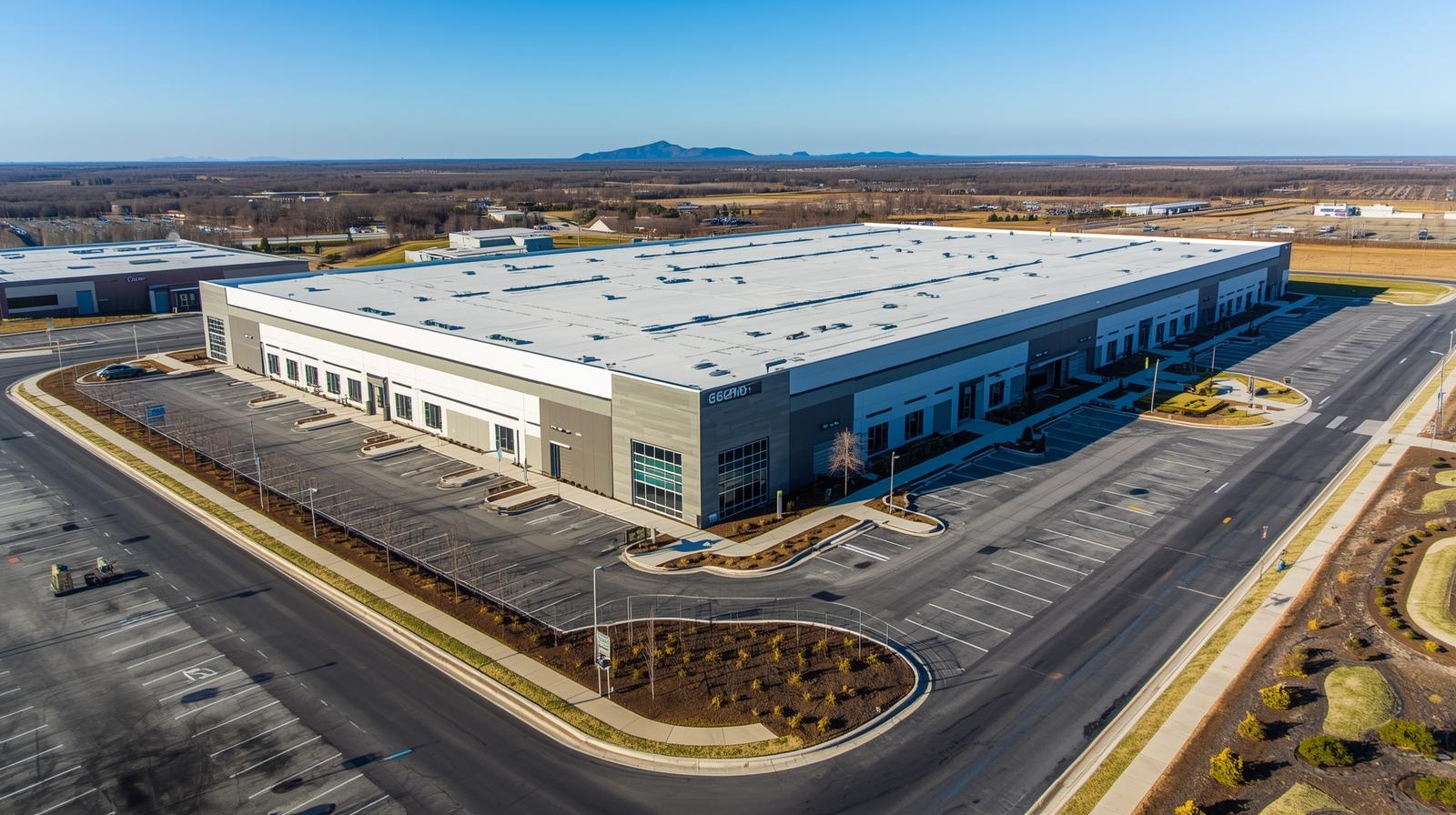
- Bulk distribution: large, modern buildings with high clear heights, many dock doors, deep truck courts, and trailer parking. Most new construction is in this category, usually toward the outer edge of the metro.
- Mid-size and multi-tenant warehouse: older and newer buildings divided among several users. These are common in established districts closer to I-285.
- Small-bay and flex: smaller suites with office and warehouse space, often with drive-in doors. Covered in the flex guide.
- Industrial outdoor storage: yards for trucks, trailers, equipment, and materials, often with a small building. See outdoor storage properties.
I-85 Northeast: Norcross to Buford and Braselton
The I-85 Northeast corridor runs from Norcross and Peachtree Corners through Duluth, Suwanee, and Buford toward Braselton. It is one of the metro's deepest industrial markets.
- Best for: regional distribution toward the Carolinas, e-commerce fulfillment, light manufacturing, and companies recruiting from Gwinnett's large labor pool.
- What you'll find: older multi-tenant warehouse and service-center buildings closer to I-285, and newer bulk distribution farther out along I-85 and I-985.
- Watch for: I-85 congestion at peak hours, distance to the airport for time-sensitive freight, and building age in the closer-in parks. Read about Duluth's business corridor.
I-20 West and Fulton Industrial Boulevard
Fulton Industrial Boulevard is one of the region's largest established industrial districts. The corridor continues west along I-20 into Austell, Lithia Springs, and Douglasville, near Norfolk Southern's intermodal terminal in Austell.
- Best for: distribution toward Alabama and the west, users who want rail intermodal access, and companies looking for value in established warehouse space.
- What you'll find: a wide range of older and renovated warehouses along Fulton Industrial, plus newer distribution buildings farther west in Douglas County.
- Watch for: older building specs. Check clear height, sprinkler type, column spacing, truck court depth, and dock and roof condition carefully. See our Austell market overview.
South Atlanta and the Airport
The area around Hartsfield-Jackson, including College Park, East Point, Hapeville, Forest Park, Union City, and Fairburn, is the metro's air cargo and national distribution hub. CSX's intermodal terminal in Fairburn adds rail access.
- Best for: air freight forwarders, time-sensitive distribution, national and regional distribution centers, and companies that need quick access to I-85 South and I-285.
- What you'll find: older warehouse stock close to the airport and newer, larger buildings along the South Fulton Parkway and in Union City and Fairburn.
- Watch for: local traffic around the airport, competition for labor, and site drainage. Read about East Point and Atlanta logistics trends.
I-75 South: Clayton and Henry Counties
Heading south along I-75 through Clayton County and Henry County (Stockbridge, McDonough, and Locust Grove), the market shifts toward large, modern distribution buildings.
- Best for: big-box distribution, Port of Savannah-linked importers using I-75 toward Macon and I-16, and companies shipping toward Florida.
- What you'll find: newer bulk warehouses with high clear heights, deep truck courts, and trailer parking on larger sites.
- Watch for: heavy truck traffic on I-75, labor competition among large distribution centers, and commute times for managers who live on the north side.
I-75 Northwest: Marietta to Cartersville
The I-75 Northwest corridor runs through Marietta, Kennesaw, and Acworth into Bartow County and Cartersville. It points toward Chattanooga and the Georgia Ports Authority's Appalachian Regional Port in northwest Georgia.
- Best for: manufacturers, distributors serving Tennessee and the northwest, contractors, and companies with a Cobb or Cherokee workforce.
- What you'll find: small-bay and mid-size buildings in Cobb, and newer large distribution and manufacturing sites farther north in Bartow County.
- Watch for: congestion where I-75 meets I-285 and I-575, and hilly sites that can limit truck court depth and expansion. See industrial opportunities in Smyrna.
I-20 East: Lithonia, Conyers, and Covington
East along I-20, the corridor through DeKalb, Rockdale, and Newton counties serves distribution toward Augusta and the Carolinas.
- Best for: regional distribution heading east, manufacturers, and users who want an alternative to the busier I-85 Northeast corridor.
- What you'll find: mid-size warehouses and newer distribution buildings in Lithonia, Conyers, and Covington.
- Watch for: labor access at the outer edge of the corridor and the drive to customers on the north side. Read our Lithonia industrial overview.
GA-400 North: Alpharetta, Roswell, and Cumming
The GA-400 corridor is better known for office than for warehouses. Industrial space here is mostly light industrial, flex, and small-bay rather than bulk distribution.
- Best for: light manufacturing, service companies, and distributors whose customers or owners are in North Fulton and Forsyth.
- What you'll find: a limited supply of light industrial and flex buildings, often in established business parks.
- Watch for: scarce availability and zoning limits on heavier uses. See our North Georgia industrial corridor guide.
Intown and infill industrial
Inside I-285, industrial space is scarce and getting scarcer as older buildings are redeveloped. Pockets remain on the Westside, along Chattahoochee Avenue, on the Southside near Moreland Avenue, and around Chamblee and Doraville.
- Best for: last-mile delivery, service and trade businesses, makers, and companies that need to be close to intown customers.
- What you'll find: older, smaller buildings with lower clear heights and tighter loading, often at a premium because of location.
- Watch for: zoning changes, truck access on city streets, and redevelopment pressure that can affect lease renewals. Read about adaptive reuse of historic industrial buildings.
What to check on any Atlanta industrial building
Corridor matters, but the building has to work for your operation. On every tour, confirm:
- Clear height and whether it fits your racking plan.
- Loading: number of dock-high doors, levelers, and grade-level drive-in doors.
- Truck court depth and trailer parking, including whether trucks can turn without blocking the street.
- Column spacing and floor slab thickness for your equipment.
- Power: amperage, voltage, and three-phase service.
- Fire protection: sprinkler type and whether it supports your storage height and commodity.
- Zoning, including outdoor storage and any hazardous materials.
- Office build-out, restrooms, and parking for employees.
- Roof age, drainage, and dock condition, especially in Georgia heat and storms.
For a deeper walkthrough, use our industrial site visit checklist and read why industrial tours should follow the truck route first.
Leasing or buying industrial space
Many industrial users lease, but owning can make sense for companies with long-term plans and specialized build-outs. Compare both paths in leasing vs. buying and purchasing industrial in Atlanta.
Work with Swartz Co
We help warehouse and industrial users compare corridors, tour buildings, and negotiate leases through our tenant representation service. We also help buyers with acquisitions. See our warehouse and distribution space page and current listings, or call 678.973.2776.
More Greater Atlanta market guides
- All Atlanta commercial real estate market guides
- Atlanta Office Market Guide by Submarket
- Atlanta Flex and Small-Bay Space Market Guide
- Atlanta Retail Space Market Guide by Area
- Atlanta Medical Office Market Guide
Disclaimer: These guides are general information about the Greater Atlanta commercial real estate market. They are not legal, tax, or investment advice. Availability, pricing, zoning, and building conditions are property-specific and change over time, so confirm the details for any site before you commit.