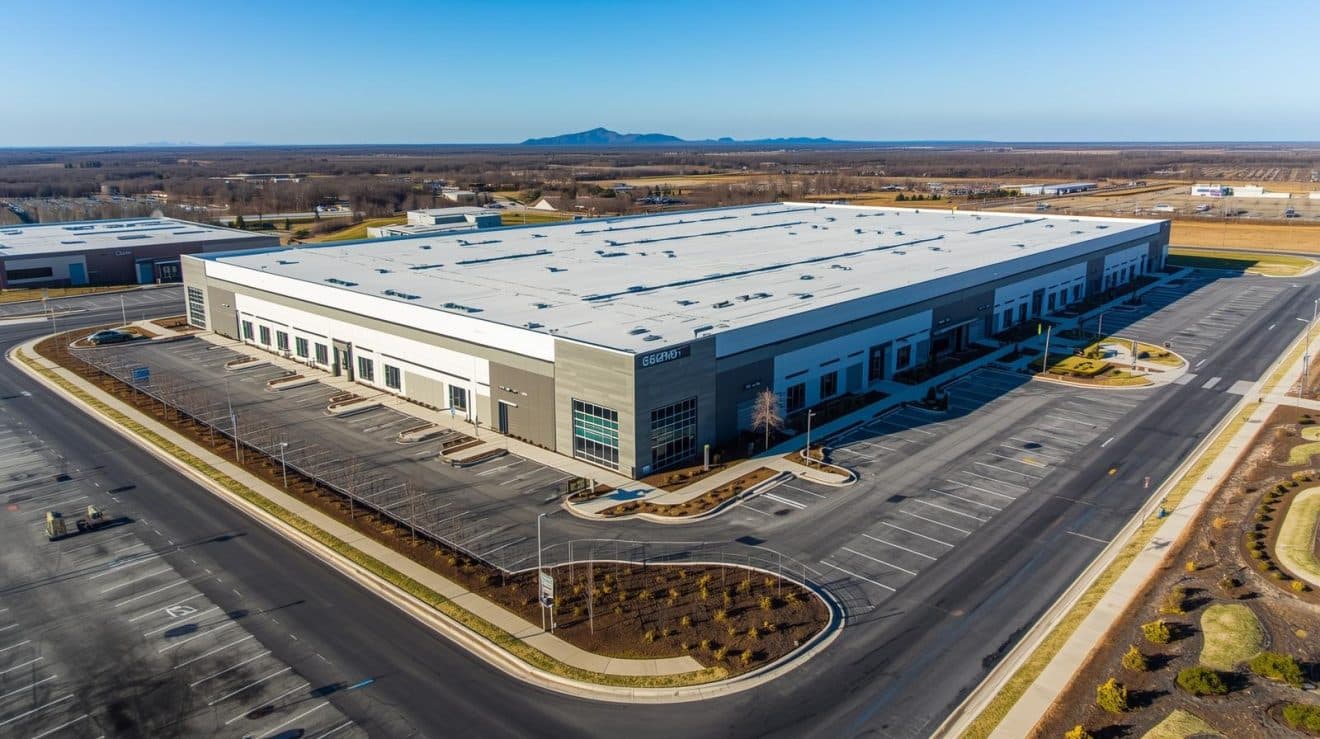


Purchasing commercial property in Greater Atlanta typically requires financing for most buyers. Few individuals or businesses can pay cash for industrial buildings, office properties, or retail centers. Understanding your financing options, what lenders require, and how to structure deals helps you acquire properties successfully and maximize returns through appropriate use of leverage.
Commercial real estate financing differs significantly from residential mortgages in terms of requirements, structures, and available programs. Lenders evaluate commercial properties based on income production rather than just borrower credit. Down payment requirements are higher. Loan terms and conditions vary more widely than standardized residential financing. Knowing these differences helps you prepare properly and choose financing that fits your situation.
Conventional Commercial Mortgages
Traditional bank financing represents the most common source of commercial real estate loans. Banks and credit unions provide mortgages secured by properties for qualified borrowers meeting their requirements.
Loan to value ratios for commercial mortgages typically range from sixty five to eighty percent, meaning you need down payments of twenty to thirty five percent of purchase prices. A one million dollar property might require a two hundred thousand to three hundred fifty thousand dollar down payment depending on the lender and property characteristics.
Property quality affects how much lenders will advance. Newer buildings with strong tenants might qualify for higher loan to value ratios than older properties with weaker occupancy. Class A properties in good locations typically get better financing terms than Class C buildings in secondary markets.
Debt service coverage ratios measure whether property income adequately supports loan payments. Lenders typically want to see net operating income exceeding debt service by twenty to thirty percent or more. Properties with weak coverage require larger down payments or might not qualify for financing at all.
Interest rates on commercial mortgages reflect various factors including loan size, property type, borrower strength, and market conditions. Rates typically run higher than residential mortgages but vary based on specific situations. Shopping among multiple lenders helps you find competitive rates.
Loan terms for commercial mortgages commonly run five to twenty five years. Shorter terms mean higher monthly payments but less total interest paid. Longer terms reduce monthly payments but extend your debt obligation. Many commercial loans have terms shorter than full amortization periods, creating balloon payments when terms end.
Amortization schedules determine how quickly you pay down principal. Loans might fully amortize over terms or amortize over longer periods with balloon payments due before full payoff. A loan with a ten year term might amortize over twenty five years, requiring you to refinance or pay the remaining balance at year ten.
Recourse versus non recourse provisions affect your personal liability. Recourse loans allow lenders to pursue your other assets if properties cannot satisfy debts through foreclosure. Non recourse loans limit lender recovery to just the properties. Most commercial loans include some recourse provisions or guarantees.
Prepayment penalties appear in many commercial mortgages. Lenders might charge fees if you pay loans off early, protecting their expected interest income. Understanding prepayment terms matters if you might sell properties or refinance before loan terms end.
Small Business Administration Financing
The Small Business Administration offers loan programs specifically designed to help small businesses purchase commercial real estate. These programs provide favorable terms compared to conventional financing but involve more requirements and longer processing.
SBA 504 loans are the primary program for commercial real estate purchases. This program provides long term fixed rate financing with lower down payments than conventional mortgages. The structure uses two loans, one from a bank and one from a Certified Development Company, together funding up to ninety percent of projects.
Down payment requirements under SBA 504 programs typically run ten percent for most borrowers. This significantly lower equity requirement compared to conventional financing helps businesses acquire property without tying up as much capital.
Fixed interest rates for the Certified Development Company portion of 504 loans provide long term rate certainty. These rates get set based on treasury yields at loan closing and remain fixed for twenty or twenty five year terms. The bank portion might be fixed or variable depending on the lender.
Eligible uses under 504 programs include purchasing land and buildings, constructing facilities, and making substantial renovations. The property must be used primarily for your business operations. Investment properties purely for rental income do not qualify.
Owner occupancy requirements mean you must occupy at least fifty one percent of existing buildings or sixty percent of new construction for the property to qualify. This limits 504 financing to businesses buying space for their own use rather than purely investment purchases.
Job creation or retention goals factor into 504 program objectives. The SBA wants loans to support business growth and employment. Your business should demonstrate how the real estate acquisition supports these objectives.
Processing timelines for SBA loans typically run longer than conventional financing. The additional documentation, approvals, and coordination among multiple parties means closings often take sixty to ninety days or more. Sellers need to understand and accept these longer timeframes.
Fees for 504 loans include Certified Development Company charges, lender fees, and other costs that add to your total financing expense. However, the favorable terms and low down payments often outweigh these additional costs.
Commercial Bridge Loans
Bridge financing provides short term capital for situations where permanent financing is not yet available or appropriate. These loans bridge gaps between buying properties and securing long term mortgages.
Short term duration characterizes bridge loans that typically run six months to three years. You use these loans temporarily until you can refinance into permanent financing or sell properties.
Higher interest rates on bridge loans reflect their short term nature and higher risk. Rates might run several percentage points above conventional commercial mortgages. The higher cost is acceptable for temporary financing but makes bridge loans inappropriate for long term holds.
Situations favoring bridge loans include purchasing properties needing improvements before they qualify for permanent financing, acquiring properties quickly when time does not permit arranging long term loans, or buying properties with temporary vacancy or other issues that prevent conventional financing.
Value add projects often use bridge financing to acquire and improve properties. You buy buildings with bridge loans, make improvements that increase income and value, then refinance into permanent mortgages based on improved performance.
Interest only payments common with bridge loans reduce monthly debt service during short holding periods. You pay only interest without principal amortization, keeping payments lower while you stabilize or improve properties.
Exit strategies require planning before taking bridge loans. You need clear paths to either refinance into permanent financing or sell properties to repay bridge loans when terms end. Lenders want to see realistic exit plans before approving these loans.
Hard Money and Private Lending
Private lenders and hard money sources provide alternatives when conventional financing is unavailable or when you need faster closings than banks can accommodate.
Asset based lending characterizes hard money where lenders focus primarily on property values rather than borrower financials or income production. If properties have adequate equity cushions, hard money lenders might approve loans that banks would decline.
Higher interest rates and fees make hard money expensive compared to conventional financing. Rates might reach ten to fifteen percent or higher depending on situations. Origination fees add several percentage points to total costs. These expensive terms only make sense for short term needs or when no alternatives exist.
Lower loan to value ratios from hard money lenders typically max out at sixty to seventy percent of property values. You need more equity than conventional financing requires. However, the ability to close quickly and approval based mainly on property values rather than extensive underwriting can make hard money useful despite higher costs.
Speed of closing represents a major hard money advantage. These lenders can often approve and fund loans in days or weeks versus months for conventional financing. This speed helps when you need to close quickly on properties or when timing matters for other reasons.
Situations appropriate for hard money include purchasing properties at auctions requiring quick closings, buying distressed assets needing immediate acquisition and renovation, or bridging short term gaps when permanent financing will be available soon.
Exit strategies matter even more with hard money than bridge loans due to the high costs. You need clear plans to refinance into cheaper permanent financing or sell properties quickly to avoid paying expensive rates for extended periods.
Portfolio Loans and Blanket Financing
Some financing structures involve multiple properties rather than single asset mortgages. These approaches serve investors with larger holdings or those acquiring multiple properties.
Portfolio loans from single lenders cover multiple properties you own. Rather than separate mortgages on each building, one loan uses your entire portfolio as collateral. This simplifies administration and might provide better terms than multiple individual loans.
Blanket mortgages secure multiple properties under one loan document. You might use blanket financing to acquire several buildings in single transactions or to refinance existing holdings into consolidated debt. Blanket structures reduce the number of individual loans you manage.
Cross collateralization in portfolio or blanket loans means all properties secure the entire debt. Defaulting on the loan affects all properties even if some perform well. This creates risk but also allows you to leverage strong properties to support financing on weaker ones.
Release provisions in blanket mortgages allow you to sell individual properties by paying down portions of loans and releasing those properties from the blanket lien. Without release provisions, you cannot sell any properties until you pay off entire loans.
Advantages of portfolio approaches include simplified administration, potentially better rates from lenders seeing your full portfolio strength, and ability to leverage strong properties to finance additional acquisitions.
Disadvantages include cross collateralization risk, potential difficulties if you want to sell individual properties, and concentration of all your holdings with single lenders who might have significant control over your portfolio.
Seller Financing
Property sellers sometimes provide financing as part of sales, either supplementing institutional loans or replacing them entirely. This approach can solve problems when conventional financing is difficult or create favorable terms for buyers.
Seller carryback loans involve sellers taking back mortgages on properties they sell. You pay down payments to sellers and make payments over time on seller held notes rather than immediately paying full purchase prices.
Situations where seller financing makes sense include properties that cannot qualify for conventional loans due to condition or occupancy issues, buyers who cannot meet bank requirements, or sellers wanting to defer capital gains taxes through installment sales.
Terms for seller financing vary widely by negotiation. Interest rates might approximate market rates or differ based on what buyers and sellers agree upon. Loan terms could be short requiring refinancing into permanent loans or longer matching conventional mortgages.
Down payments with seller financing typically still require substantial equity. Sellers want protection and rarely finance entire purchase prices. You might pay twenty to forty percent down and finance the remainder with seller notes.
Advantages for buyers include easier approval than banks require, potential for flexible terms negotiated directly with sellers, and possible savings on loan origination fees and costs that institutional lenders charge.
Advantages for sellers include earning interest on notes rather than reinvesting full proceeds, potential installment sale tax treatment spreading gains over multiple years, and completing sales that conventional financing could not support.
Risks for sellers include buyer default and having to foreclose to recover properties, properties potentially deteriorating under new ownership, and having capital tied up in notes rather than immediately available.
Construction Financing
Building new commercial properties or substantially renovating existing buildings requires construction loans that differ from permanent mortgages on completed properties.
Two loan closings with separate construction loans and permanent mortgages used to be standard. You closed construction financing to fund building, then closed permanent loans when construction completed to pay off construction debt. This involved two sets of closing costs and approvals.
Single closing construction to permanent loans now provide streamlined financing where one approval covers both construction and permanent phases. You close once and the loan automatically converts from construction to permanent financing when building completes. This reduces costs and simplifies the process.
Draw schedules during construction allow you to access loan funds as work progresses rather than receiving entire amounts at closing. Lenders inspect work and approve draws at various completion stages, protecting them from advancing money before work is done.
Interest only payments during construction reduce your carrying costs while buildings are under development. You pay only interest on drawn amounts without principal amortization until construction completes and loans convert to permanent financing with principal and interest payments.
Guarantees during construction are nearly universal. Even if permanent financing will be non recourse, lenders typically require personal guarantees during construction to protect against cost overruns or completion failures. Guarantees often burn off when projects complete and stabilize.
Preparing to Apply for Financing
Understanding what lenders require and preparing properly improves your likelihood of approval and helps you obtain favorable terms.
Financial documentation including personal tax returns, business tax returns, financial statements, and bank statements establish your financial capacity. Lenders want to see you have resources to complete purchases and operate properties successfully.
Property information including offering memoranda, rent rolls, operating statements, lease documents, and property descriptions help lenders evaluate buildings and determine appropriate loan amounts and terms.
Business plans explaining your experience, what you intend to do with properties, and how you will operate them successfully address lender questions about your capabilities and strategies.
Down payment verification proves you have necessary equity to complete purchases. Lenders want to see down payment funds exist in your accounts rather than assuming you will come up with money.
Credit history both personal and business gets reviewed by all institutional lenders. Strong credit improves your approval chances and the terms you receive. Credit problems need explanations and might require larger down payments.
Existing real estate holdings and their performance show lenders your experience and capability with investment property. Strong track records help you get approved and receive better terms.
Working with Lenders and Brokers
Navigating commercial real estate financing benefits from understanding how to work effectively with lenders and potentially using mortgage brokers.
Shopping multiple lenders helps you find competitive rates and terms. Different lenders have different appetites for various property types, locations, and borrower profiles. What one lender declines another might enthusiastically approve.
Mortgage brokers who specialize in commercial financing can save you time by shopping your loan to multiple lenders simultaneously. They know which lenders fit different situations and can negotiate on your behalf. Broker fees add costs but might be worthwhile for access to better financing.
Relationship banking provides advantages when you have existing relationships with lenders. Banks you already work with know you and might provide better terms or easier approval than institutions where you have no history.
Local lenders often understand Greater Atlanta markets better than national institutions. Community banks and regional lenders familiar with Atlanta submarkets might approve loans that distant lenders decline or provide better terms based on local knowledge.
Documentation completeness and accuracy speeds approval processes. Providing everything lenders request promptly and ensuring information is correct prevents delays and demonstrates professionalism that lenders appreciate.
Swartz Co Financing Guidance
At Swartz Co Commercial Real Estate, we help buyers throughout Greater Atlanta understand their financing options and connect with appropriate lenders for industrial, office, and retail property purchases.
We provide guidance on what financing approaches make sense for your situation based on property types, your experience, and financial capacity. Our knowledge of different lending programs helps you understand options.
We connect you with lenders who finance commercial real estate in Greater Atlanta including banks, SBA lenders, private sources, and other financing providers. Our relationships throughout the lending community help you access appropriate capital.
We help you understand what documentation lenders need and prepare properly for financing applications. Our experience with commercial transactions helps you present yourself effectively to lenders.
We coordinate with lenders during purchase transactions to ensure financing progresses on schedule and closes when needed. Our transaction management keeps deals moving forward.
Contact our team to discuss commercial real estate financing for property purchases in Greater Atlanta. We are here to help you understand options and secure financing that supports your acquisition goals.